Barcode Scanning
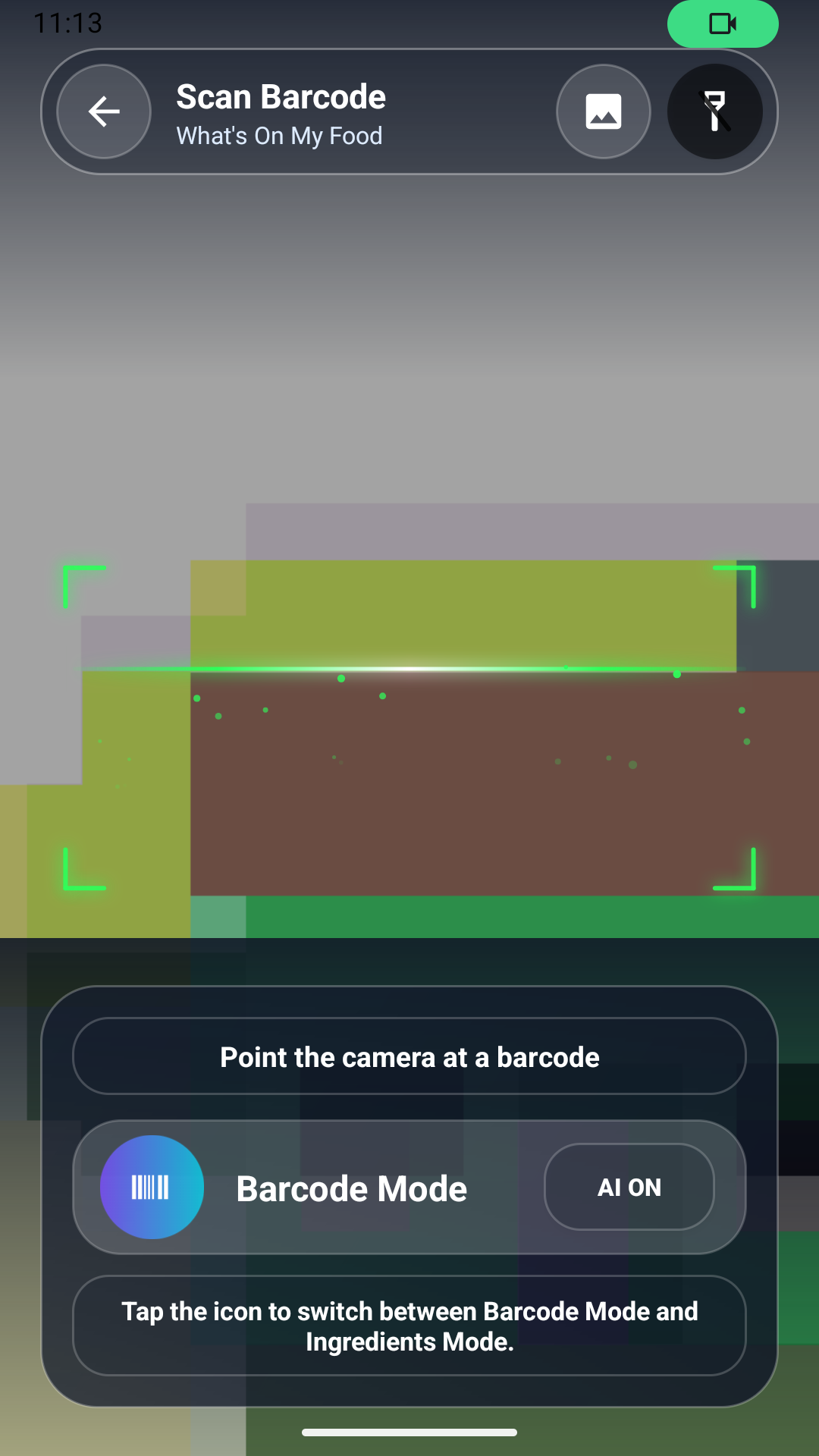
Fast barcode capture powered by CameraX + ML Kit for on-device scanning.
Scan food products, analyze ingredients, and receive clear, source-grounded explanations when you need them.
The Problem
Many food-scanning apps depend on incomplete static databases. When a product is missing or awaiting review, shoppers are left without useful information at the moment of purchase.
Features
Ten focused capabilities that turn a barcode into a decision you can trust.
Fast barcode capture powered by CameraX + ML Kit for on-device scanning.
Read printed ingredient labels directly from the package when data is missing.
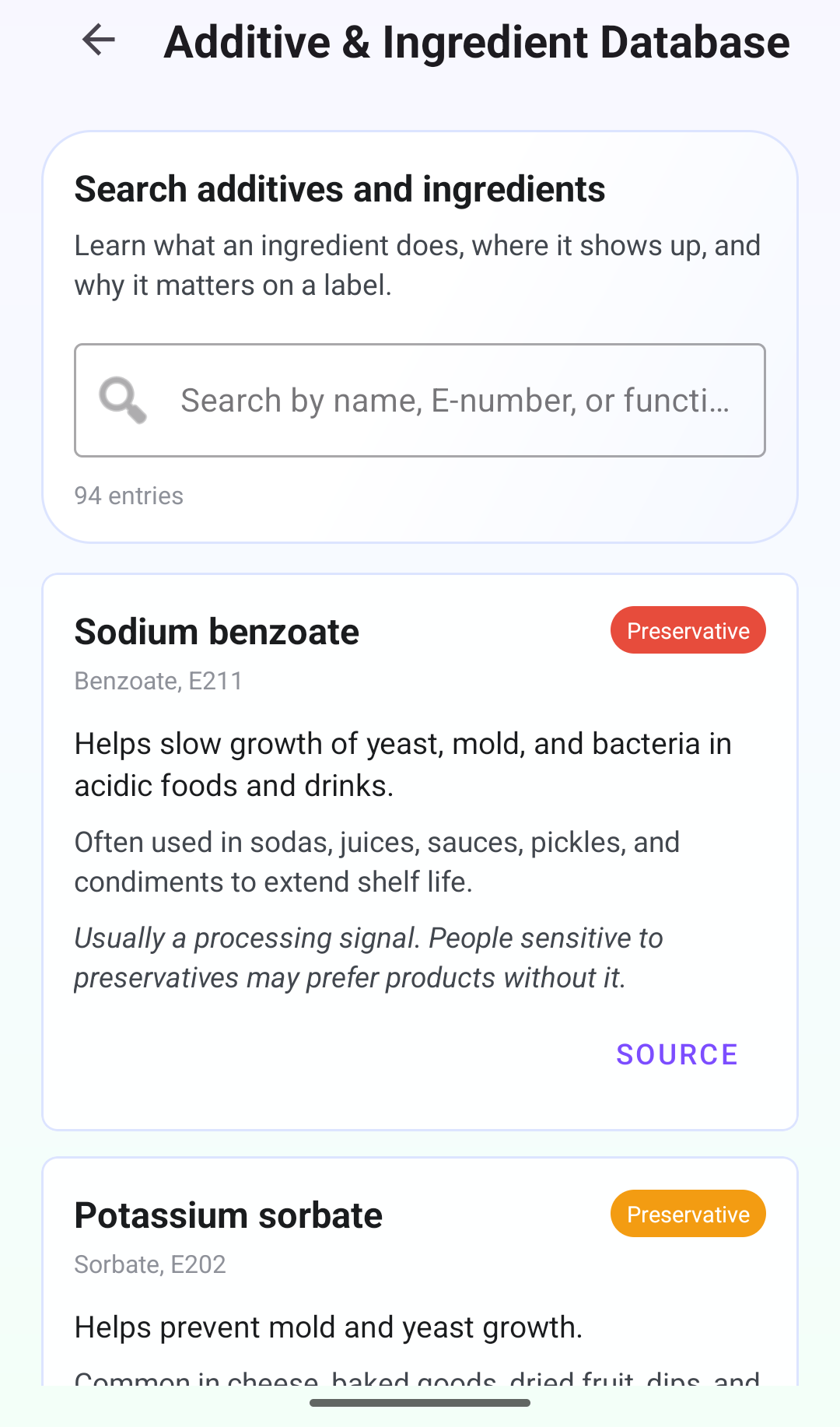
Transparent, rule-based analysis of additives, sugars, sodium, oils, and allergens.
Plain-language explanations grounded in the evidence collected during the scan.
Every explanation links back to authoritative references and cited studies.
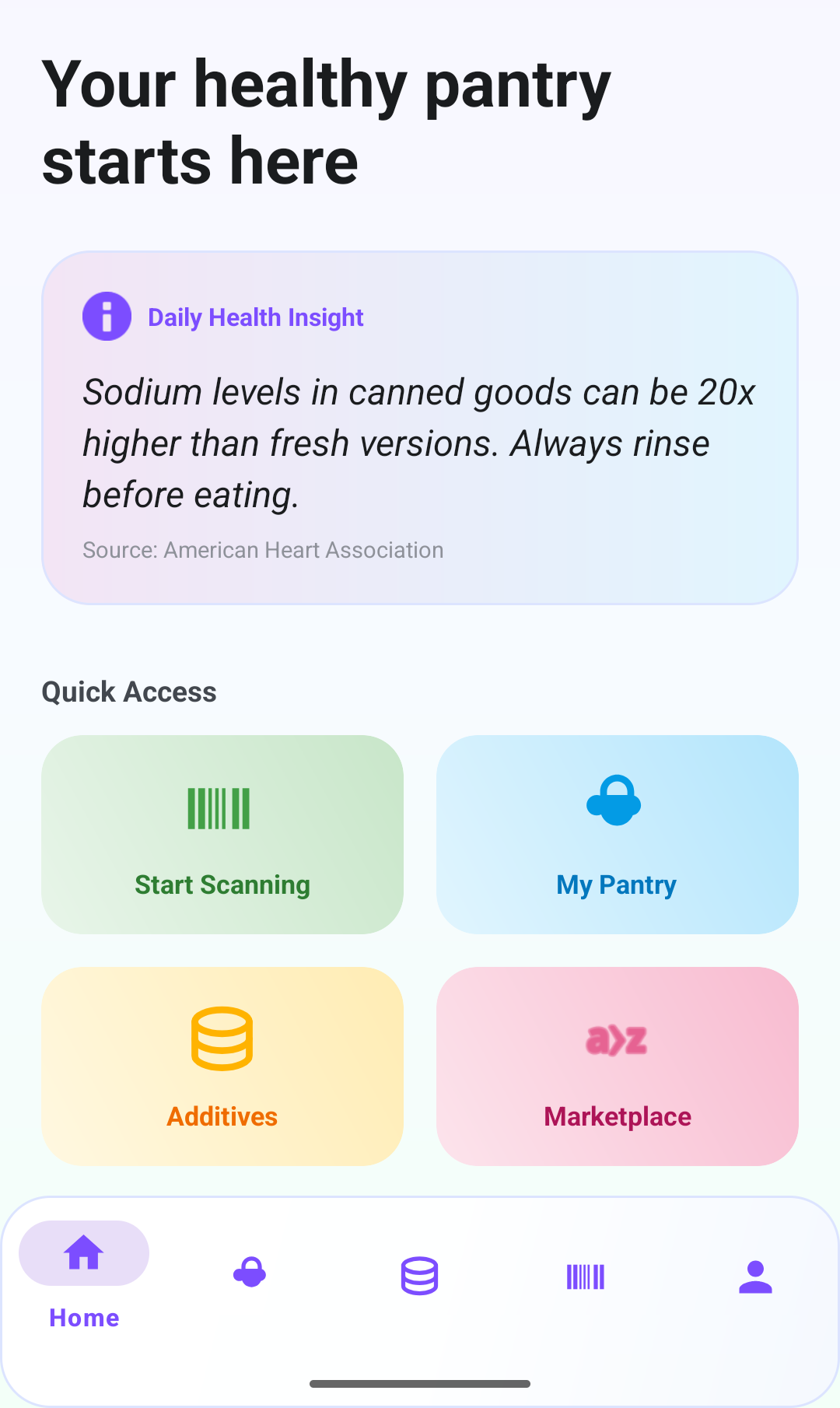
Save scanned products, tag favorites, and track what you keep at home.
Visualize patterns across your pantry: additives, sugar levels, allergen exposure.
See similar products with cleaner ingredient profiles or better nutrition.
Discover where alternatives are sold so you can act on the recommendation.
Full experience in English, Spanish, and French.
How It Works
Use the barcode scanner or capture the ingredient label with your camera.
Look up available nutrition and product information from trusted databases.
Apply transparent, deterministic rules for additives, sugars, sodium, and allergens.
Generate a plain-language explanation grounded in the collected evidence.
See references, limitations, and where the analysis is uncertain.
Add to your pantry or browse cleaner alternatives at nearby retailers.
Application Gallery
Actual screens from the What's On My Food Android app.
Graduate Capstone Research
Research Question
Do real-time AI-assisted food explanations produce higher user satisfaction and stronger recommendation intention than static database results?
Condition A
Static database results
Condition B
Real-time AI-assisted explanations
Both conditions are grounded in the same available product evidence, allowing a direct within-participant comparison.
Study Status
[Planning]
Update this field as the project moves through IRB review, recruiting, data collection, and completion.
The study examines:
Development Process
Problem discovery
CompleteCompetitor research
CompletePrototype development
CompleteBarcode & OCR implementation
CompleteIngredient-analysis rules
In ProgressAI integration
In ProgressPilot study
PlannedCommittee feedback
PlannedIRB preparation
PlannedFinal user study
PlannedResults & future improvements
PlannedTechnology
Design & Safety Principles
Every claim links to a citable source.
Written for real shoppers, not experts.
Deterministic analysis runs before any AI output.
Missing data and limits are shown, not hidden.
Minimal, purposeful data collection.
Grounded responses with refusal paths.
English, Spanish, French — with accessibility in mind.
General food-label information only.
Developer
Mobile Application Developer & Graduate Researcher · Full Sail University, M.S. Computer Science · Florida
I build mobile experiences that put clear, trustworthy information in people's hands. What's On My Food is my capstone project — combining Android, computer vision, and AI to help everyday shoppers understand what's actually in the food they buy.
Contact
I'd love to hear from employers, collaborators, and academic reviewers.